
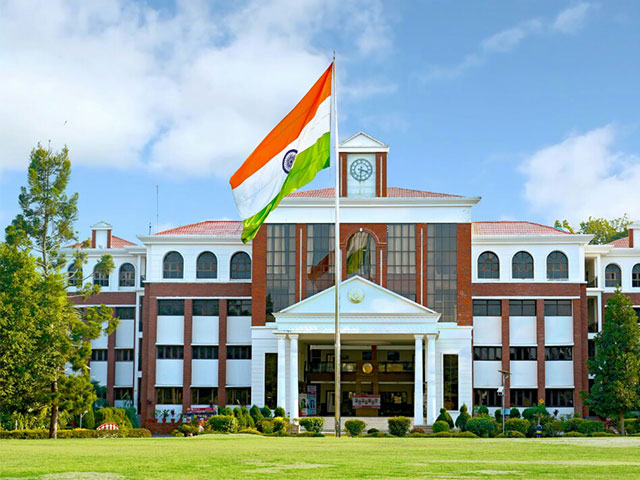
Graphic Era (Deemed to be University)
Today, Graphic Era Deemed to be University stands tall as NAAC ‘A+’ accredited university with 7 NBA accredited programs and is ranked among the Top 50 Universities of India by National Institutional Ranking Framework (NIRF), Ministry of Education with All India Rank 52 in the Engineering Category, All India Rank 52 in Management Category, and All India Rank 48 in the University Category. The premier university regards industry-academia partnerships as an integral part of its teaching methodology & curriculum, and has taken a significant initiative in engineering programs by entering partnerships with Tata Technologies and IBM. Moreover, it hosts the Technology Business Incubator, which funds, mentors, and nurtures ideas, start-ups, and technology-based entrepreneurship. Graphic Era Deemed to be University has acquired transnational dimensions through student exchange and knowledge-sharing programs with many foreign universities and has been acclaimed and honoured at international forums for its brilliance in upholding the highest standards of education. The alumni of Graphic Era are making their mark worldwide in marquee brands like Apple, Google, Microsoft, and HSBC, to name a few, as well as serving the nation in all branches of the Armed Forces.
Graphic Era Hill University
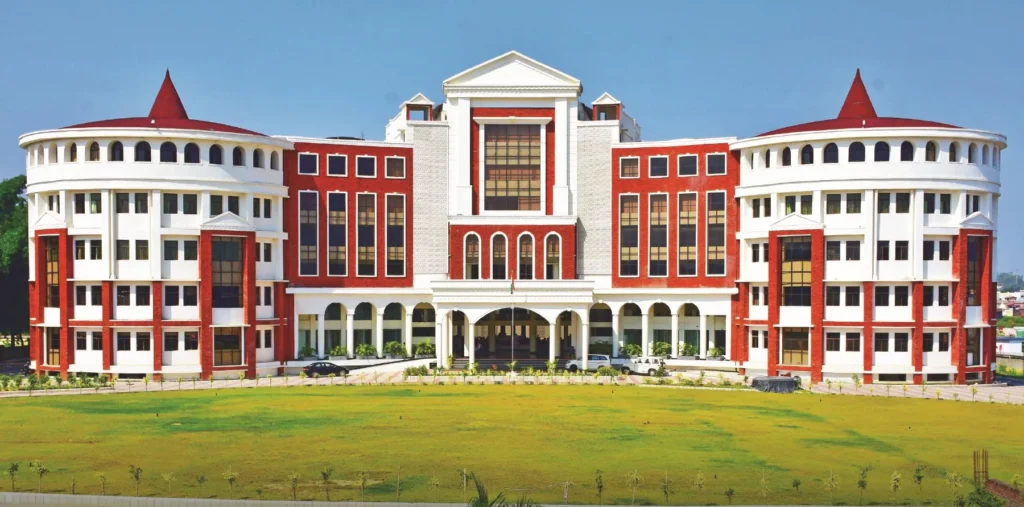
Graphic Era Hill University, founded in 2011 by Prof. (Dr.) Kamal Ghanshala, aims to transform youth futures through quality education. Located in Dehradun, Uttarakhand, Graphic Era Hill University is a private institution established under Section 2(f) of the UGC Act, 1956, as part of the Graphic Era Educational Society.
Graphic Era Hill University is renowned for its innovative education system, producing professionals across industries. The picturesque Dehradun campus, bordered by Rajaji National Park and Clement Town Cantonment, offers a vibrant environment with state-of-the-art facilities, including sports amenities, modern accommodations, gyms, libraries, computer centers, high-speed Wi-Fi, smart classrooms, auditoriums, multiple cafeterias, and recreational areas.
Graphic Era Hill University also has campuses in Bhimtal and Haldwani. The Bhimtal campus, set in the scenic Kumaon region, offers a tranquil learning environment with modern facilities. The Haldwani campus combines modern infrastructure with the region’s cultural heritage, providing a rich educational experience.
Graphic Era Hill University offers undergraduate, postgraduate, and doctoral programs in engineering, law, management, computer applications, humanities, applied sciences, animation, fashion designing, journalism, mass communication, and agriculture. The university attracts a diverse student population from across India and abroad, enriching the cultural experience on campus. Graphic Era Hill University is committed to accessible
education, offering a 25% domicile fee concession to Uttarakhand students and additional discounts to deserving candidates. The university emphasizes holistic development through co-curricular and extracurricular activities, including sports, cultural events, and clubs, and encourages community service and social initiatives.
Department of Civil Engineering
The Department of Civil Engineering was established in the year 2007 and has grown over the years into one of the finest centers of training in the field of civil engineering. The Department offers a four-year course leading to the Bachelor’s Degree in Civil Engineering (NBA Accredited) and two-year courses leading to Master’s degree in two major specializations of civil engineering (viz., Structural Engineering and Geoinformatics Engineering) as well as PhD in Civil Engineering. The laboratories are equipped with excellent and advanced equipments and provide all required facilities for advanced research in specific fields of civil engineering like Earthquake Engineering, Water Resources Engineering etc.
About The Conference
The International Conference on Sustainable Intelligence Technologies and Advanced Research in Alternative Materials (SITARAM 2026), scheduled to be held from 9-10th October 2026, is envisioned as a comprehensive academic forum addressing emerging challenges and innovations in civil engineering and allied disciplines. The conference aims to bring together researchers, academicians, industry professionals, and policymakers to exchange scientific knowledge, present original research, and discuss future directions in sustainable and intelligent infrastructure development.
SITARAM 2026 places a strong emphasis on structural engineering and construction materials, with particular focus on performance-based design, structural resilience, seismic safety, and durability of infrastructure systems. Advanced and alternative construction materials, including supplementary cementitious materials, recycled aggregates, fiber reinforced composites, and low carbon binders, form a central theme of the conference. Discussions are expected to highlight material characterization, mechanical performance, long term durability, and life cycle-based sustainability assessment.
In the domain of geotechnical engineering, the conference addresses soil structure interaction, ground improvement techniques, foundation engineering, and geoenvironmental engineering. Special attention is given to smart monitoring systems, numerical modelling, and data-driven approaches for slope stability, underground structures, and infrastructure founded on problematic soils. The integration of intelligent sensing technologies and predictive analytics in geotechnical practice is expected to stimulate interdisciplinary research.
Water resource engineering constitutes another major track, covering hydrological modelling, flood risk assessment, groundwater management, and climate-resilient water infrastructure. Contributions related to smart water networks, remote monitoring of hydrological parameters, and sustainable urban drainage systems are encouraged. These themes are closely aligned with environmental engineering and environmental science, with a focus on pollution control, waste management, air and water quality assessment, and circular economy concepts for infrastructure systems.
Transportation engineering sessions are designed to address traffic modelling, pavement engineering, intelligent transportation systems, and sustainable mobility solutions. Research on alternative pavement materials, performance-based evaluation, and the use of artificial intelligence in traffic management and safety analysis is particularly relevant.
Remote sensing and GIS are important cross-cutting themes at SITARAM 2026. Applications in infrastructure planning, disaster risk reduction, environmental monitoring, and urban growth analysis are expected to be extensively discussed. The integration of geospatial technologies into civil engineering decision-making supports data-driven, resilient infrastructure development.
Abstract Submission
Abstract Acceptance
Full Paper Submission
Full Paper Acceptance
Last Date of Registration